Working at height is an unavoidable part of many industries across the UK, from construction and manufacturing to telecommunications, warehousing, facilities management and renewable energy. However, it also remains one of the leading causes of serious workplace injuries and fatalities.
A fall from even a relatively low height can result in severe injuries, long-term disability or loss of life. That’s why employers and employees alike must understand the risks involved and implement effective control measures before any work begins.
Whether you’re carrying out roof maintenance, installing equipment, using ladders or accessing difficult-to-reach locations, following safe working practices is essential. This guide explores what working at height means, why safety matters and the most effective methods for protecting workers from falls.
What Is Working at Height?
Working at height refers to any work carried out in a location where a person could fall and suffer injury if suitable precautions are not in place.
Many people assume working at height only applies to construction workers on tall buildings, but the definition is much broader. It includes any situation where there is a risk of falling from one level to another.
Examples include:
- Working on ladders or stepladders
- Carrying out roof inspections or repairs
- Working from scaffolding
- Using mobile elevated work platforms (MEWPs)
- Accessing elevated storage areas
- Working near fragile roofs or skylights
- Performing maintenance on industrial machinery
- Rope access work on buildings, bridges or wind turbines
Even relatively short falls can cause life-changing injuries, making proper planning and risk assessment essential regardless of the height involved.
Why Working at Height Safety Matters
Falls from height continue to be one of the most common causes of workplace accidents across the UK.
The consequences extend beyond physical injuries. A single incident can lead to serious injury or fatality, project delays, financial losses, increased insurance costs, legal action and lasting reputational damage.
The good news is that many of these accidents can be prevented through proper planning, suitable equipment and comprehensive worker training.
Common Hazards Associated with Working at Height
Understanding the risks is the foundation of effective fall prevention.
Some of the most common hazards include:
- Falling from ladders
- Slipping on wet or uneven surfaces
- Falling through fragile roofing materials
- Unprotected roof edges
- Unsecured scaffolding
- Adverse weather conditions
- Falling tools or materials
- Inadequate anchor points
- Incorrect use of safety harnesses
- Lack of worker training
Identifying these hazards before work begins allows employers to implement suitable control measures.
Best Practices Before Working at Height
Every task involving work at height should begin with careful planning and a thorough assessment of potential risks.
Carry Out a Risk Assessment
Assess the work area carefully, considering the height involved, potential fall hazards, weather conditions, ground stability, access routes and emergency rescue arrangements. Where specialist knowledge is required, seek advice from a competent professional.
Avoid Working at Height Where Possible
The safest approach is to eliminate the need to work at height altogether. Consider whether the task can be completed from ground level using extendable tools, remote inspection equipment or alternative methods.
Select Suitable Equipment
If working at height cannot be avoided, choose equipment that is appropriate for the task and complies with relevant safety standards. Equipment should always be inspected before use and maintained in accordance with the manufacturer’s guidance.
Reduce the Risk of Falls
Where risks cannot be eliminated, suitable fall protection systems should be used to minimise both the likelihood of a fall and the severity of any potential injury.
Fall Protection Systems
Fall protection systems are designed to prevent workers from reaching areas where a fall could occur or to provide continuous protection while they work.
A typical fall protection system includes:
- Certified anchor point
- Full-body safety harness
- Anchor strap
- Fall arrester
These systems are widely used during roof maintenance, construction work and industrial operations where there is an ongoing risk of falling.
Fall Arrest Systems
Fall arrest systems allow workers to access high-risk areas while ensuring that any fall is safely stopped before the worker reaches a lower level.
A standard system generally consists of:
- Secure anchor point
- Full-body harness
- Guided fall arrester
- Energy-absorbing lanyard
Fall arrest equipment is commonly used in construction, telecommunications, utilities and industrial maintenance where complete fall prevention is not always possible.
Work Positioning Systems
Work positioning systems enable workers to maintain a stable position while keeping both hands free to perform their tasks safely.
These systems generally include:
- Anchor point
- Safety harness
- Adjustable positioning lanyards
By limiting unnecessary movement, work positioning systems improve stability, reduce fatigue and help minimise the likelihood of falls.
They are commonly used during tower maintenance, electrical work and structural inspections.
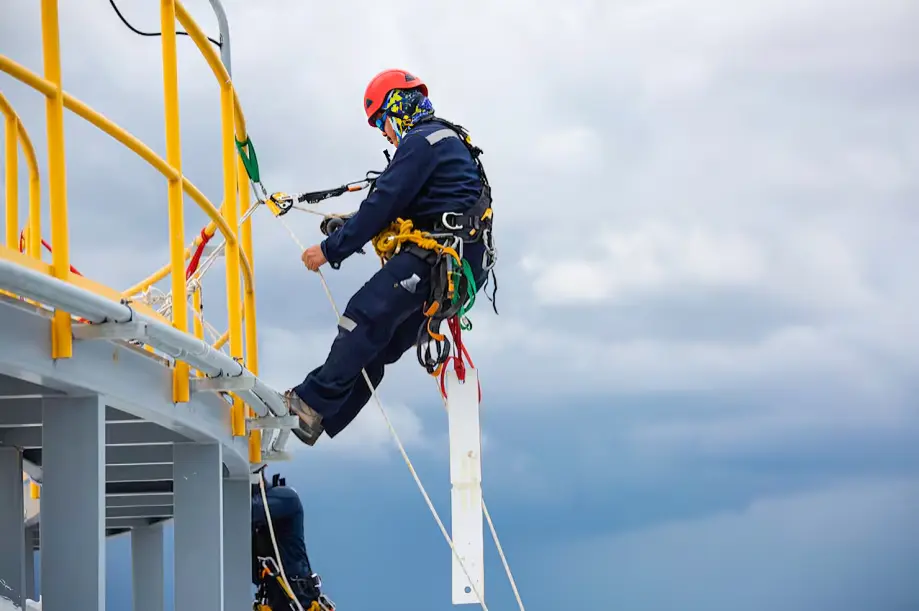
Rope Access Systems
Rope access is a highly effective solution when conventional access equipment such as scaffolding or elevated platforms is impractical.
Using specialised ropes and equipment, trained technicians can safely access difficult locations while remaining securely supported throughout the task.
A rope access system typically includes:
- Certified anchor point
- Specialist harness with seating support
- Working rope
- Independent backup rope
- Ascenders, descenders and connectors
This method is widely used for high-rise building maintenance, bridge inspections, wind turbine servicing, industrial cleaning and confined access work.
Rescue Systems
Every working at height operation should have a clearly defined rescue plan.
If a worker falls and remains suspended in a harness, prompt rescue is essential to reduce the risk of suspension trauma and other serious complications.
A typical rescue system includes:
- Secure anchor point
- Rescue harness or rescue sling
- Rescue lifting equipment
- Controlled descent devices
- Evacuation equipment
Planning rescue procedures before work begins ensures workers can be recovered quickly and safely during an emergency.
The Importance of Training
Even the highest-quality equipment cannot prevent accidents if workers are not trained to use it correctly.
Effective training enables workers to:
- Identify workplace hazards
- Inspect safety equipment
- Wear harnesses correctly
- Select appropriate anchor points
- Use rope access systems safely
- Respond effectively during emergencies
Regular refresher training helps maintain competency and reinforces safe working practices.
Equipment Inspection and Maintenance
Routine inspections are essential to ensure that safety equipment remains reliable.
Checks should include:
- Frayed webbing
- Corrosion
- Damaged connectors
- Loose stitching
- Worn ropes
- Cracked components
- Signs of impact damage
Any equipment that fails inspection should be removed from service immediately and replaced where necessary.
Building a Strong Safety Culture
Creating a safe workplace requires commitment from everyone involved.
Encouraging workers to report hazards, inspect equipment regularly, follow established procedures and participate in ongoing training helps build a proactive safety culture where accidents are less likely to occur.
Concluding Remarks
Although working at height carries substantial dangers, these risks can be successfully controlled by utilizing proper safety equipment, conducting detailed risk evaluations and establishing a robust safety mindset.
The primary goal remains constant across all methodologies—whether implementing fall arrest, fall protection, rope access, work positioning or rescue protocols: safeguarding personnel while achieving operational efficiency and success.
Organizations can significantly decrease on-site incidents, boost productivity and guarantee that every worker returns home unharmed by dedicating resources to premium equipment, implementing extensive training and meticulously preparing for every task.

