

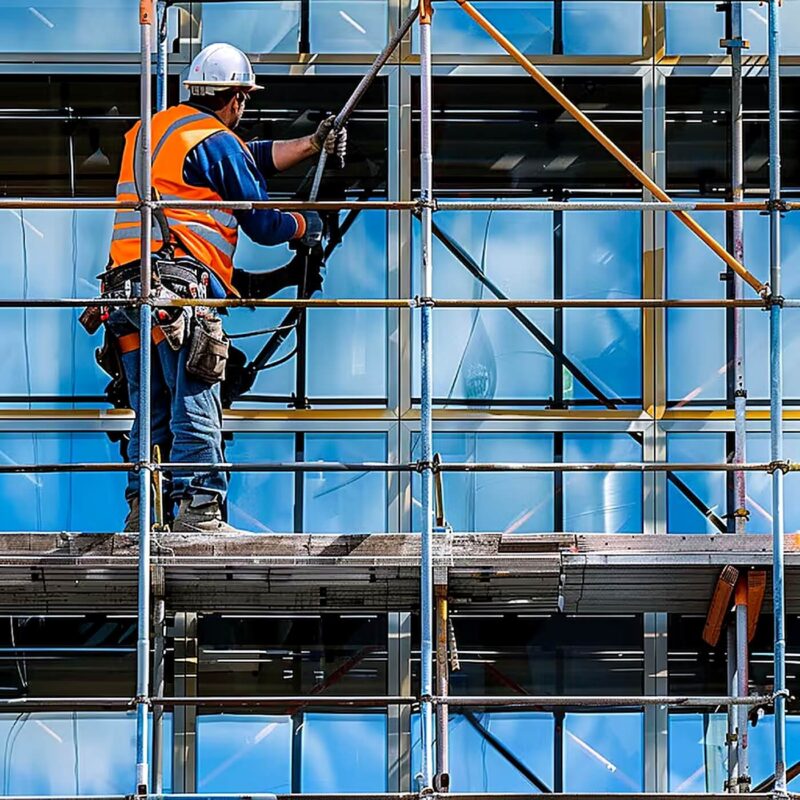
Maintaining tall commercial and residential buildings can be challenging, particularly when important areas of a property are difficult to reach from ground level. Traditional access methods such as scaffolding, mobile elevated work platforms and cherry pickers can be effective, but they may not always be practical for every building or maintenance project.
Abseiling maintenance and industrial rope access provide an alternative way for trained professionals to reach high, restricted or awkward areas of a building. From façade inspections and window cleaning to external repairs and gutter maintenance, rope access can help contractors complete a wide range of tasks with less disruption to the surrounding area.
When properly planned and carried out by suitably trained professionals, rope access can be an efficient solution for high-level building maintenance.
What Is Abseiling Maintenance?
Abseiling maintenance uses specialist rope access equipment to allow trained technicians to reach parts of a building that may otherwise be difficult to access.
Unlike recreational abseiling, professional rope access is specifically designed for work at height. Technicians use specialist harnesses, ropes, anchor systems, descent devices and backup safety equipment to access the required work area.
The technique can be used on many different types of properties, including:
- Commercial buildings
- Apartment blocks
- Offices
- Industrial premises
- Warehouses
- Hotels
- Schools and public buildings
- High-rise developments
- Historic and period properties
Before work begins, the building, access requirements, working environment and proposed maintenance activities should be assessed to determine whether rope access is appropriate.
Why Use Rope Access for Building Maintenance?
There are several reasons why property owners and facilities managers may consider abseiling for high-level maintenance.
Reduced Need for Scaffolding
Scaffolding can require significant time and space to install and dismantle. On busy streets or properties with restricted access, this can create additional logistical challenges.
Rope access can provide access to specific areas without necessarily requiring a full scaffold structure.
Less Disruption
Building maintenance often takes place while properties remain occupied. Rope access can help reduce disruption to residents, employees, customers and pedestrians when compared with some larger access systems.
Access to Difficult Areas
Some parts of a building façade may be difficult to reach using conventional equipment. Rope access allows trained technicians to work on high-level and awkward areas that may otherwise require more extensive access arrangements.
Suitable for Targeted Repairs
Rope access can be particularly useful for individual repairs and inspections. Rather than installing extensive access equipment for a relatively small job, technicians can reach the specific area that requires attention.
Flexible Access
Depending on the building and project, rope access can be used for a wide range of maintenance activities, making it a versatile option for property managers.
Common Abseiling Maintenance Methods
The exact rope access system used will depend on the building, task, risk assessment and applicable safety requirements. Professional contractors select appropriate equipment and techniques for the specific project rather than relying on a single method for every job.
Rope Descent Systems
Controlled rope descent allows technicians to move down the external face of a building while remaining connected to appropriate safety systems.
This can be useful for inspections, cleaning and maintenance work where access is primarily required from above.
Ascending and Descending Rope Access
Specialist rope access systems can allow trained technicians to both ascend and descend a building façade.
This provides greater flexibility when the work involves several levels or requires technicians to reposition themselves during the project.
Horizontal and Traversing Access
Some buildings require technicians to move horizontally across a façade rather than simply travelling vertically.
Rope access systems can be configured to allow controlled movement across difficult-to-reach areas where suitable anchor arrangements are available.
Positioning for Detailed Repairs
Once technicians have reached the required location, rope access equipment can help them maintain a stable working position while carrying out appropriate repairs or inspections.
This can be particularly useful for façade maintenance, sealant replacement, masonry work and other targeted tasks.
Equipment Used for Rope Access Maintenance
Professional rope access requires specialist equipment selected according to the work being undertaken.
Common equipment may include:
- Full-body rope access harnesses
- Working ropes
- Safety or backup ropes
- Descender devices
- Ascender devices
- Connectors and carabiners
- Anchor systems
- Helmets
- Protective equipment
- Rope protection systems
- Rescue equipment
- Communication equipment
Equipment must be suitable for the intended application and inspected and maintained according to the manufacturer’s requirements and relevant procedures.
Where Is Abseiling Used in Building Maintenance?
Rope access can be used for a variety of external maintenance and inspection tasks.
High-Level Window Cleaning
Windows on tall buildings can be difficult to access using conventional methods. Rope access can provide a way for trained technicians to reach individual windows and sections of glazing.
Façade Inspection and Repairs
External walls should be inspected periodically for signs of deterioration. Rope access can allow technicians to examine difficult-to-reach sections closely and carry out suitable repairs.
Potential maintenance requirements can include damaged masonry, failed joints, cracks, loose materials and deteriorating finishes.
Gutter and Downpipe Maintenance
Blocked or damaged gutters can cause water to overflow and potentially contribute to problems with external walls and the building fabric. Rope access can provide access to high-level guttering and rainwater systems where appropriate.
Cladding Maintenance
Modern commercial buildings often incorporate extensive cladding systems. Rope access can assist with inspections and targeted maintenance where access from ground level is difficult.
Painting and External Finishing
Certain external painting and decorating projects can benefit from specialist rope access where the working areas are high or difficult to reach.
Roof and Building Inspections
Rope access can assist with visual inspections of roof edges, parapets, façades and other elevated areas. Any inspection should be carried out within the contractor’s competence and the project’s agreed scope.
Safety Considerations for Abseiling Maintenance
Working at height requires careful planning and appropriate safety controls. Professional rope access should only be undertaken by suitably trained and competent personnel.
Important considerations include:
Site-Specific Risk Assessment
The building and working environment should be assessed before work begins. This can include identifying potential falling-object risks, public access, weather conditions, anchor arrangements and other site hazards.
Secure Anchor Systems
Appropriate anchorage is fundamental to rope access. Anchor arrangements should be assessed and used in accordance with the relevant system and project requirements.
Backup Protection
Professional rope access systems incorporate appropriate backup and safety arrangements rather than relying solely on a single connection.
Weather Monitoring
Wind, rain, ice and other weather conditions can affect high-level work. Work should only proceed when conditions are suitable and the planned controls remain effective.
Rescue Planning
A suitable rescue procedure should be established before work starts. Teams need to understand how an emergency would be managed if a technician became unable to descend independently.
Equipment Inspection
Ropes, harnesses, connectors, descent devices and other equipment should be checked before use and maintained in accordance with relevant manufacturer and industry requirements.
Abseiling vs Scaffolding for Building Maintenance
Abseiling is not necessarily a replacement for scaffolding in every situation.
Scaffolding can provide a large, stable working platform and may be appropriate for extensive refurbishment projects where workers need prolonged access across an entire façade.
Rope access can be more suitable for certain targeted inspections, repairs and maintenance tasks where extensive scaffolding would be disproportionate or difficult to install.
The decision should consider:
- The building’s height and design
- The location of the work
- The type of maintenance required
- Duration of the project
- Ground-level access
- Public areas surrounding the property
- Building occupancy
- Weather exposure
- Safety requirements
- Available access points
A professional assessment should determine the most suitable method for each project.
Choosing a Professional Rope Access Contractor
Choosing an experienced contractor is essential when arranging high-level building maintenance.
Before appointing a company, consider:
- Relevant rope access training and qualifications
- Previous experience with similar buildings
- Suitable insurance
- Risk assessments and method statements
- Emergency and rescue arrangements
- Equipment inspection procedures
- Clear quotations and project scope
- References or examples of previous work
A reputable contractor should be able to explain how the proposed access system will work and how risks will be controlled throughout the project.
Professional Abseiling and Rope Access in London
For property owners and facilities managers looking for specialist high-level maintenance services, Abseiling London can be a useful reference when considering professional rope access solutions.
London’s buildings present a wide variety of access challenges, from busy commercial streets and high-rise developments to residential blocks and historic properties. Specialist rope access techniques can be used for appropriate projects involving façade maintenance, inspections, cleaning and difficult-access repairs.
The right access method will depend on the individual building and the work required, so a professional site assessment should always be carried out before work begins.
Final Thoughts
Abseiling maintenance provides a flexible approach to accessing difficult areas of commercial and residential buildings. From window cleaning and façade inspections to gutter maintenance, cladding repairs and external maintenance, rope access can be suitable for a wide range of applications.
Its relatively small working footprint can also make it useful where scaffolding or mechanical access equipment would create additional logistical challenges.
However, safety should always remain the priority. Rope access work should be properly planned and undertaken by suitably trained and competent professionals using appropriate equipment and procedures.
For property owners, landlords and facilities managers, understanding the available access options can make it easier to plan high-level maintenance efficiently while protecting the condition and appearance of the building.

