

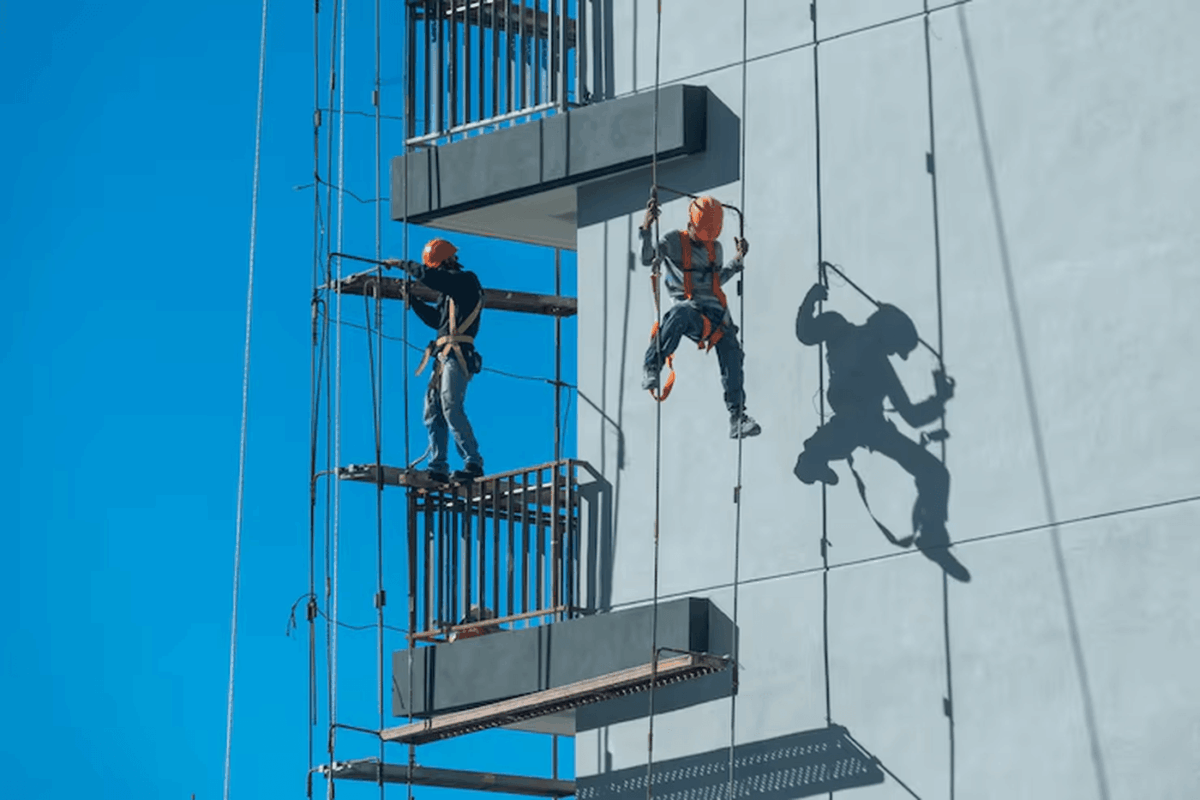
Maintaining the exterior of a building can become challenging when access is restricted, particularly on high-rise, commercial and complex structures. Traditional access solutions such as scaffolding, mobile elevated work platforms and cranes are not always practical or cost-effective.
Abseiling maintenance, also known as industrial rope access, provides an alternative method for reaching difficult areas of a building using specialist ropes, harnesses and associated safety equipment. When properly planned and carried out by competent professionals, rope access can provide efficient access for inspection, maintenance and repair work at height.
From high-rise residential blocks and office buildings to historic properties and industrial structures, abseiling can be used for a wide variety of external maintenance tasks across the UK.
What Is Abseiling Maintenance?
Abseiling maintenance involves trained rope access technicians using a controlled system of ropes and specialist equipment to access parts of a building that may otherwise be difficult to reach.
Unlike recreational abseiling, industrial rope access is a professional working-at-height technique. Technicians use dedicated systems that allow them to descend, ascend and position themselves safely while carrying out maintenance tasks.
Rope access can be particularly useful where conventional access equipment would require significant space, extensive installation or disruption to occupants and surrounding areas.
Common Abseiling Maintenance Methods
Different rope access techniques can be used depending on the building, access point and type of maintenance required.
Rope Descent Systems
A rope descent system allows technicians to move down the face of a building from an appropriate anchor point. The technician controls their descent using specialist rope access equipment while remaining connected to the system.
This approach can be suitable for inspections, cleaning, minor repairs and other work carried out across external elevations.
Ascending Rope Systems
Rope access is not limited to descending from the top of a building. Technicians can also ascend ropes to reach higher areas or reposition themselves during a project.
Specialist equipment enables controlled movement while reducing the need for large ground-based access equipment.
Work Positioning
Work positioning allows a technician to maintain a stable working position while carrying out a task.
This can be particularly useful where both hands are required for activities such as:
- Sealant replacement
- Masonry repairs
- Painting
- Façade maintenance
- Window and frame repairs
- External lighting maintenance
- Gutter and roofline work
Work positioning systems can help technicians access areas where maintaining a stable position from a conventional ladder or platform would not be suitable.
Twin-Rope Safety Systems
Professional rope access generally incorporates separate systems designed to provide primary support and an independent means of protection.
The exact configuration depends on the work being undertaken, the equipment used and the relevant risk assessment. Using appropriate redundancy is an important part of professional rope access planning.
Rope Access for Confined or Restricted Areas
Some buildings contain courtyards, shafts, atriums, roof structures or other areas where conventional access equipment is difficult to position.
Rope access can provide greater flexibility in these environments because technicians do not necessarily require a large platform or extensive scaffolding structure beneath the work area.
Building Maintenance Tasks Suitable for Abseiling
One of the main benefits of rope access is its versatility. Depending on the circumstances, technicians can carry out a range of inspection, maintenance and repair activities.
Building Inspections
Rope access can provide close-up access to façades, roofs, parapets and other elevated areas.
Technicians can inspect surfaces for issues such as cracking, deterioration, loose materials, damaged joints and other signs of wear.
Early identification of defects can help building owners arrange appropriate repairs before minor problems become more significant.
Façade Repairs
External façades can deteriorate due to weather exposure, age and general environmental conditions.
Rope access may be used to reach areas requiring:
- Masonry repairs
- Repointing
- Render repairs
- Sealant replacement
- Cladding maintenance
- Surface repairs
The appropriate repair method will depend on the building materials and condition of the façade.
Gutter and Roofline Maintenance
Blocked, damaged or poorly maintained gutters can contribute to water ingress and damage to external building elements.
Rope access technicians can reach difficult sections of roofline and guttering where conventional access is challenging, subject to suitable risk assessment and access arrangements.
External Painting and Decorating
High-level painting and decorating can require extensive access equipment.
For suitable projects, rope access can allow technicians to work directly against the building elevation while moving efficiently between areas that require attention.
Window and Glazing Maintenance
Certain high-level windows and glazed façades can be difficult to access from ground level.
Rope access may be used for selected maintenance tasks, cleaning, inspection and minor repairs, depending on the building design and the specific requirements of the work.
Signage and External Fixtures
Rope access can also be used for the installation, inspection and maintenance of selected external fixtures, signs, lighting and other building components.
The equipment and working method should always be selected according to the specific load, access and safety requirements.
Benefits of Rope Access for Building Maintenance
Reduced Need for Scaffolding
One of the main advantages of rope access is that it can reduce or eliminate the need for extensive scaffolding on suitable projects.
This can be particularly useful where scaffolding would obstruct entrances, pavements, windows or external areas.
Minimal Ground-Level Disruption
Rope access generally requires less equipment at ground level than many traditional access methods.
This can be advantageous for busy commercial premises, apartment buildings, town centres and sites where pedestrian or vehicle access needs to remain available.
Access to Difficult Areas
Buildings often contain awkward sections that are difficult to reach using conventional equipment.
Rope access can provide technicians with greater flexibility when working around architectural features, narrow spaces and complex elevations.
Efficient Project Setup
Where the building and task are suitable, rope access systems can often be established without the lengthy installation associated with some larger temporary access structures.
This can help maintenance teams reach the work area efficiently.
Potential Cost Advantages
Because rope access can reduce the requirement for certain types of scaffolding, plant or other access equipment, it may provide cost advantages on appropriate projects.
However, the most suitable access method should always be determined by the work requirements and risk assessment rather than cost alone.
Safety Considerations for Abseiling Maintenance
Working at height carries inherent risks, so professional rope access requires detailed planning and competent personnel.
Before work begins, the site should be assessed for hazards including:
- Fragile surfaces
- Falling objects
- Weather conditions
- Electrical hazards
- Traffic and pedestrian movement
- Suitable anchor locations
- Rope protection requirements
- Equipment compatibility
- Emergency access
- Rescue arrangements
Rope access equipment should be inspected, maintained and used in accordance with the manufacturer’s requirements and relevant industry guidance.
Technicians should also have appropriate training and competence for the rope access techniques and tasks they are undertaking.
The Importance of Anchor Points
A secure anchorage system is fundamental to rope access work.
Anchor points must be appropriately selected, assessed and suitable for the intended system. Depending on the building, permanent anchors may already be installed or a suitable temporary system may need to be established.
Anchor arrangements should never be assumed to be suitable simply because they appear secure. Their suitability must be assessed by appropriately competent personnel.
Weather and Environmental Conditions
Weather can have a significant effect on external rope access work in the UK.
Strong winds, heavy rain, ice, thunderstorms and other adverse conditions can create additional risks. Wind can affect both technicians and materials, while wet surfaces may make certain maintenance tasks more difficult.
Professional contractors should monitor conditions and postpone or modify work when the environment is unsuitable.
Planning an Abseiling Maintenance Project
Good preparation can make rope access work safer and more efficient.
A typical project may involve:
Initial site assessment – The building, access requirements and proposed work areas are reviewed.
Risk assessment and method statement – Potential hazards are identified and suitable control measures established.
Access planning – Appropriate anchor points, ropes, equipment and access routes are determined.
Equipment inspection – Rope access equipment and associated systems are checked before use.
Work execution – Trained technicians access the building and complete the required maintenance.
Inspection and completion – The work area is checked and equipment is safely removed once the task is complete.
Emergency and rescue procedures should also be established before work begins.
Abseiling vs Traditional Access Methods
There is no single access solution that suits every building maintenance project.
Scaffolding can be appropriate for long-duration projects involving extensive façade work. MEWPs may be effective where suitable ground access and operating space are available. Rope access can be advantageous where the building is tall, access is restricted or installing conventional equipment would create unnecessary disruption.
The decision should take account of the building structure, work required, duration, location, surrounding environment and safety considerations.
Choosing a Professional Rope Access Contractor
When arranging abseiling building maintenance in the UK, it is important to select a contractor with appropriate experience, training and safety procedures.
Ask potential contractors about:
- Relevant rope access qualifications and competence
- Previous experience with similar buildings
- Risk assessments and method statements
- Equipment inspection procedures
- Rescue and emergency arrangements
- Insurance
- Relevant industry standards and guidance
- References or examples of previous work
A professional contractor should be able to explain how the proposed access system will work and why it is suitable for the project.
A Flexible Solution for Building Maintenance at Height
Abseiling and industrial rope access can provide a flexible way to reach difficult areas of buildings without relying on extensive ground-based access equipment. From façade inspections and masonry repairs to painting, gutter maintenance and high-level cleaning, the technique can support a wide range of building maintenance activities.
The key is selecting an access system that is appropriate for the building and task, supported by competent personnel, suitable equipment and thorough planning.
For property owners, facilities managers and contractors across the UK, professional rope access can be an effective option for safely accessing challenging areas of a building while minimising disruption at ground level.

