

Brickwork plays an important role in protecting buildings from the UK’s often unpredictable weather. Over time, however, mortar joints can deteriorate due to rain, frost, temperature changes, pollution and general exposure. When this happens, brickwork pointing restoration can help protect the building, improve its appearance and prevent more serious masonry problems.
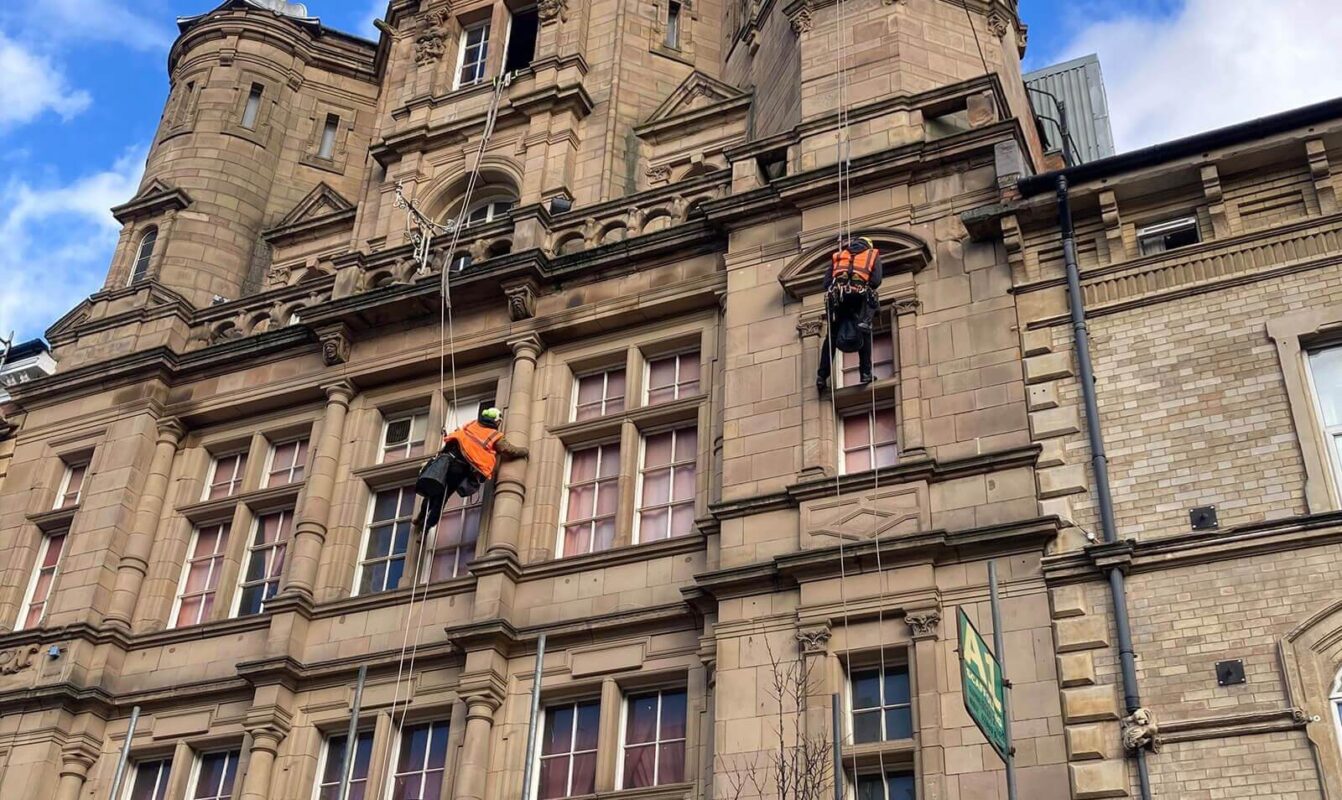
For taller buildings, restricted-access elevations and difficult-to-reach areas, abseiling and rope access can provide a practical way to inspect and restore brickwork without relying entirely on traditional scaffolding.
This guide explains how abseiling brickwork pointing restoration works, when it may be appropriate and the benefits it can offer property owners, landlords, facilities managers and building managers across the UK.
What Is Brickwork Pointing?
Pointing refers to the mortar joints between individual bricks. Although mortar can appear relatively insignificant compared with the bricks themselves, it has an important role in keeping masonry stable and helping protect the building from water penetration.
As mortar ages, it can become:
- Cracked or fractured
- Powdery or loose
- Recessed from the brick face
- Damaged by frost
- Discoloured or weathered
- Missing from sections of the wall
Damaged pointing can allow moisture to penetrate the masonry. If deterioration is left untreated, it may contribute to damp problems, frost damage and further deterioration of the brickwork.
Why Does Brickwork Pointing Deteriorate?
UK buildings are exposed to a wide range of weather conditions throughout the year. Persistent rainfall, freezing temperatures, wind and temperature fluctuations can gradually affect mortar joints.
Several factors can contribute to deterioration, including:
Weather Exposure
Rainwater can enter weakened joints, while repeated freezing and thawing can cause moisture within the masonry to expand and contract.
Age
Older buildings naturally experience wear over many years. Mortar can lose its strength and begin to deteriorate, particularly where previous repairs have not been maintained.
Movement
Building movement, settlement and vibration can result in cracking within mortar joints.
Poor Previous Repairs
Unsuitable mortar or incorrect repair techniques can sometimes accelerate deterioration rather than provide a long-term solution.
Pollution and Environmental Conditions
Urban buildings can be exposed to pollution and atmospheric contaminants that contribute to the gradual weathering of masonry.
What Is Abseiling Brickwork Restoration?
Abseiling, more commonly referred to within the industry as industrial rope access, involves trained technicians using specialist ropes, harnesses and associated safety equipment to reach elevated or difficult-to-access areas.
For suitable buildings, rope access can allow technicians to inspect brickwork and carry out pointing repairs directly from the building’s elevation.
Rather than installing extensive scaffolding around an entire structure, access is achieved using carefully planned rope systems and appropriate safety procedures.
How Does Abseiling Pointing Restoration Work?
Every project should begin with an appropriate assessment of the building and the condition of its masonry.
1. Initial Inspection
The brickwork is inspected to identify damaged or failing mortar joints, cracks, loose masonry and other defects.
The inspection can also help determine whether pointing is the appropriate repair or whether more extensive masonry work is required.
2. Access Planning
A suitable rope access system is planned around the building’s structure, access requirements and surrounding environment.
Consideration may be given to anchor points, exclusion zones, pedestrian areas, neighbouring properties and other site-specific risks.
3. Preparation of Mortar Joints
Loose and deteriorated mortar is carefully removed to an appropriate depth without unnecessarily damaging the surrounding bricks.
The joints are then prepared for new mortar.
4. Repointing
New mortar is applied to the prepared joints using a finish appropriate to the building’s existing brickwork and construction.
For older properties, particular care may be needed when selecting mortar so that the repair is compatible with the existing masonry.
5. Finishing and Cleaning
Once the pointing has been completed, the joints can be finished neatly and the surrounding brickwork checked for any remaining defects or debris.
6. Final Inspection
The completed work should be inspected to ensure the repaired areas have been properly finished and that any additional defects identified during the project have been addressed or reported.
Why Use Rope Access for Brickwork Repairs?
One of the main advantages of rope access is its ability to provide access to areas that can be difficult or expensive to reach using conventional methods.
Reduced Need for Extensive Scaffolding
For suitable projects, rope access can reduce the requirement for large scaffold structures. This may be particularly useful for high-rise buildings, narrow elevations and locations where scaffolding would create significant disruption.
Access to Difficult Areas
Rope access technicians can work on elevations, shafts, towers and other areas where conventional access equipment may be challenging.
Potentially Less Disruption
Because there may be less equipment at ground level, access routes, entrances and surrounding areas can remain more accessible during the work.
Flexible Working
Rope access can be suitable for targeted repairs rather than requiring an entire building elevation to be scaffolded when only specific areas need attention.
Efficient Inspection and Repair
Inspection and remedial work can often be carried out as part of the same access operation, helping identify and address defects efficiently.
When Is Abseiling Suitable for Repointing?
Rope access is not automatically the right solution for every building. A professional assessment should consider the building’s structure, height, condition, location and the nature of the required work.
It can be particularly useful for:
- High-rise residential buildings
- Commercial properties
- Apartment blocks
- Offices
- Industrial buildings
- Listed or historic properties, subject to appropriate requirements
- Narrow or restricted-access elevations
- Towers and other tall structures
- Localised masonry repairs
Where extensive structural repairs, heavy materials or significant reconstruction are required, alternative access arrangements may be more appropriate.
Signs Your Brickwork May Need Repointing
Regular inspections can help identify problems before they become more extensive.
Look out for:
Cracked mortar joints: Visible cracking can indicate deterioration or movement.
Missing mortar: Gaps between bricks should be investigated, particularly on exposed elevations.
Crumbling or powdery mortar: Mortar that easily breaks away may no longer be providing adequate protection.
Water penetration: Damp patches or moisture entering through external masonry can sometimes be associated with defective pointing.
Loose bricks: Movement or loose masonry requires prompt professional assessment.
Visible erosion: Deeply weathered or recessed joints can leave the edges of bricks more exposed to the elements.
The Importance of Choosing the Right Mortar
Repointing is not simply a case of filling gaps with new mortar. The replacement mortar needs to be suitable for the building and existing masonry.
This is particularly important when working on older UK properties. Mortar that is significantly harder than the surrounding brickwork can create compatibility problems and may cause damage to softer masonry over time.
The existing construction, age of the building, brick type, exposure and condition should therefore be considered when determining an appropriate repair approach.
Abseiling vs Scaffolding for Brickwork Repairs
Both rope access and scaffolding have their place in building maintenance.
Scaffolding can provide a stable working platform across large areas and may be appropriate for extensive refurbishment projects. However, it can require considerable installation time, space and planning.
Rope access can be advantageous where repairs are localised or where installing extensive scaffolding would be impractical.
The best approach depends on the building and the scope of work rather than simply choosing the cheapest access method.
Safety Considerations for Rope Access
Working at height requires careful planning and competent personnel.
Professional rope access operations should consider:
- Suitable anchor systems
- Personal protective equipment
- Rope systems and access equipment
- Rescue arrangements
- Exclusion zones
- Falling-object protection
- Public and pedestrian safety
- Weather conditions
- Emergency procedures
- Site-specific risk assessments and method statements
Work should be undertaken by appropriately trained and competent professionals using equipment that is suitable for the task.
How Often Should Brickwork Be Inspected?
There is no single inspection interval that suits every building. Factors such as building age, construction type, exposure, location and previous repair history can all influence maintenance requirements.
Tall buildings and exposed elevations may benefit from regular professional inspections, particularly after periods of severe weather.
A proactive maintenance programme can help identify deteriorating pointing before minor defects develop into more significant masonry problems.
Benefits of Proactive Pointing Restoration
Addressing defective pointing early can provide several benefits.
Protects the Masonry
Sound mortar joints help protect the wall from moisture penetration and weather exposure.
Helps Prevent Further Deterioration
Early repairs may reduce the likelihood of small defects developing into larger masonry problems.
Improves Appearance
Fresh, well-executed pointing can significantly improve the appearance of tired or weathered brickwork.
Supports Building Maintenance
Regular masonry inspections and repairs form an important part of a wider external building maintenance programme.
Can Reduce Disruption
Where suitable, rope access can make targeted repairs possible without the extensive access arrangements sometimes associated with large-scale scaffolding.
Why Professional Assessment Matters
Brickwork problems are not always caused by defective pointing. Cracks, staining, dampness, displaced bricks or failing mortar can have different underlying causes.
Simply replacing visible mortar without understanding why it has deteriorated may result in an ineffective repair.
A professional inspection can help establish:
- The extent of the deterioration
- Whether repointing is required
- Whether bricks also need repair or replacement
- The most suitable mortar approach
- The appropriate access method
- Whether additional remedial work is necessary
Maintaining Brickwork After Restoration
Once restoration has been completed, ongoing maintenance can help preserve the condition of the building.
Property owners and managers should consider periodic inspections of exposed elevations, particularly where previous defects have been identified.
Gutters, downpipes and other rainwater systems should also be kept in good condition because uncontrolled water flow can contribute to masonry deterioration.
Vegetation growing against or within brickwork should be monitored, while any new cracking, loose masonry or damaged pointing should be assessed promptly.
Conclusion
Abseiling brickwork pointing restoration can provide an effective access solution for suitable UK properties where masonry repairs are required at height or in difficult-to-reach locations.
By combining specialist rope access with careful inspection, appropriate mortar selection and professional repointing techniques, deteriorating brickwork can be restored while helping protect the building against ongoing weather exposure.
Whether you manage a residential block, commercial property, industrial building or another large structure, regular brickwork inspections and proactive maintenance can help identify pointing problems before they become more costly and disruptive.
If you have noticed cracked, missing or deteriorating mortar joints, arranging a professional masonry assessment is a sensible first step towards determining the most appropriate repair and access solution.

