

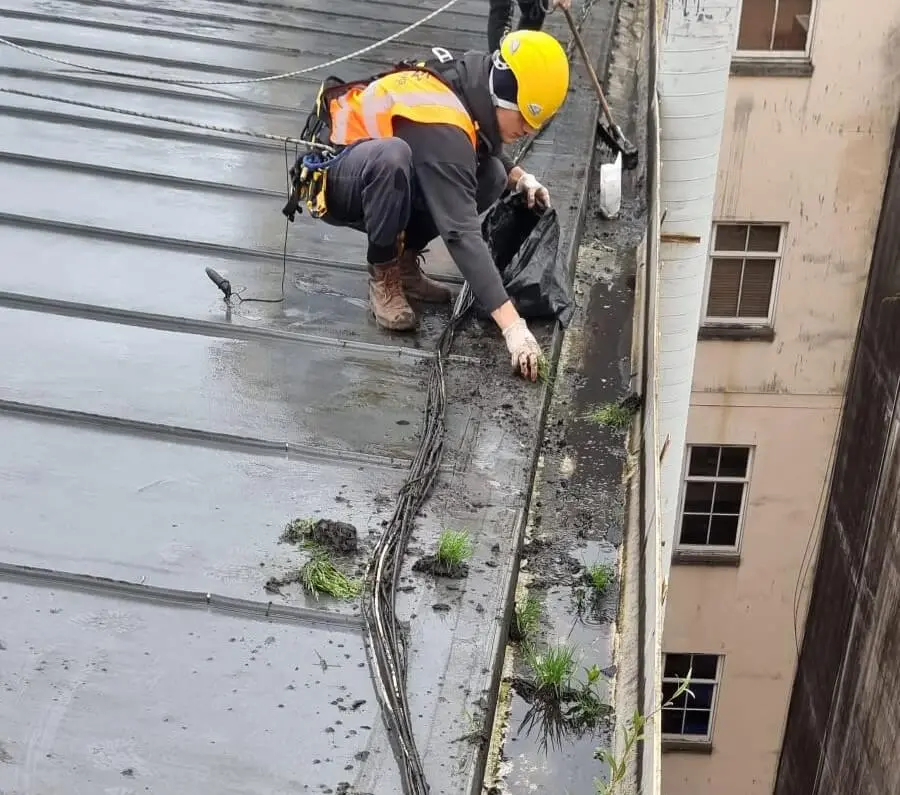
Gutters play a vital role in protecting a building from rainwater by directing water safely away from the roof, walls and foundations. However, like any other part of a property, guttering requires regular inspection, cleaning and maintenance to remain effective.
Across the UK, changing weather conditions, heavy rainfall, falling leaves, moss and general debris can quickly lead to blocked or damaged gutters. If these issues are overlooked, they can result in overflowing water, damp, staining and potentially more serious damage to the building.
For properties where gutters are difficult to access, rope access can provide a practical and cost-effective alternative to traditional access methods. It allows trained professionals to reach challenging areas without the need for extensive scaffolding or large access equipment.
What Can Cause Gutter Blockages?
UK properties are regularly exposed to weather conditions that can contribute to gutter blockages. Falling leaves and organic debris from surrounding trees are among the most common causes, particularly during autumn and winter.
Gutters can also collect:
- Moss and algae
- Small branches and twigs
- Roof debris
- Dirt and silt
- Litter and other debris
- Nesting materials
As debris builds up, water can no longer flow freely through the guttering and downpipes. During periods of heavy rainfall, this can cause gutters to overflow and allow water to run down external walls.
Regular cleaning helps prevent these problems and provides an opportunity to identify damaged sections before they develop into more expensive issues.
Why Is Regular Gutter Maintenance Important?
A properly functioning guttering system helps protect the wider building structure by directing rainwater towards the appropriate drainage points.
When gutters become blocked or damaged, water may overflow onto walls, windows, façades and foundations. Over time, repeated exposure to excess moisture can contribute to staining, damp, deterioration of masonry and other forms of water damage.
Regular inspections can also identify issues such as loose brackets, damaged joints, cracked sections and problems with downpipes. Addressing these concerns early can help reduce the likelihood of more extensive repairs later.
For commercial buildings, flats, apartment blocks and other larger properties, routine gutter maintenance can be particularly important because accessing high-level guttering can be more complicated.
What Does Professional Gutter Cleaning Involve?
Professional gutter cleaning typically begins with an inspection to identify visible blockages, damaged sections and areas that may require further attention.
Debris is then removed from the guttering, with appropriate equipment selected according to the property and the condition of the system. Where suitable, water-based cleaning methods can be used to help clear stubborn deposits and restore water flow without relying on harsh chemicals.
Downpipes and drainage outlets should also be checked to ensure water can move freely through the system. If a blockage remains, further investigation may be required to locate and remove the obstruction.
The aim is not simply to remove visible debris, but to ensure the guttering is functioning properly once the work has been completed.
When Are Gutter Repairs Required?
Cleaning alone cannot resolve every guttering problem. Over time, sections may become cracked, loose, misaligned or damaged by weather and general wear.
Common repairs can include:
- Re-securing loose guttering
- Replacing damaged sections
- Repairing or replacing joints
- Clearing persistent downpipe blockages
- Replacing damaged brackets
- Correcting alignment issues
- Sealing minor leaks where appropriate
A professional inspection can help determine whether cleaning is sufficient or whether repairs are required to restore the guttering system.
Why Choose Rope Access for Gutter Maintenance?
High-level gutters can be among the most difficult areas of a building to reach. Traditional methods such as scaffolding, ladders or powered access equipment can be effective, but they are not always practical for every property.
Rope access offers an alternative approach where suitable.
Using specialist equipment and secure anchorage systems, trained technicians can reach high and awkward areas while carrying out cleaning, inspections and minor repairs.
One of the biggest advantages is reduced setup time. Unlike full scaffolding systems, rope access equipment can generally be installed with far less disruption to the surrounding property.
Reduced Access Requirements
Scaffolding can involve significant preparation, installation and dismantling. Depending on the size and location of the building, this can add considerable time and cost to a project.
Rope access can reduce the amount of temporary access equipment required, making it particularly useful for buildings where traditional access methods would be difficult or disruptive.
Access to Difficult Areas
Gutters are not always positioned in straightforward locations. Sections may run around roof edges, behind architectural features or across areas that are difficult to reach using ladders or conventional access equipment.
Rope access allows trained technicians to work in areas that may otherwise be challenging to access, helping ensure the entire guttering system can be inspected and maintained.
Less Disruption
For occupied commercial properties, residential developments and busy sites, minimising disruption is often an important consideration.
Rope access generally requires a smaller working footprint than extensive scaffolding, which can help reduce disruption to entrances, walkways, car parks and surrounding areas.
Potentially Lower Costs
By reducing the need for extensive temporary access systems, rope access can help control project costs. The overall saving will depend on the building, scope of work and access requirements, but it can be a particularly efficient option for high-level maintenance.
Safety Should Always Come First
Rope access is a specialist working-at-height technique and should only be undertaken by appropriately trained and competent professionals.
Before work begins, the access requirements, anchor points, working environment and potential hazards should be assessed. Suitable equipment, rescue arrangements and safety procedures should also be in place.
For building owners and property managers, choosing an experienced contractor is therefore essential. A professional team should be able to explain how the work will be carried out safely and provide appropriate documentation before starting the project.
How Often Should Gutters Be Cleaned?
There is no single schedule that suits every property. The ideal frequency depends on factors such as the building’s location, surrounding trees, roof design and the amount of debris typically collected.
For many properties, gutter inspections and cleaning at least twice a year can provide a useful starting point. Buildings surrounded by mature trees or those particularly exposed to debris may benefit from more frequent checks.
It is also sensible to inspect guttering following periods of severe weather, especially after strong winds or prolonged heavy rainfall.
Keep Your Guttering Working Efficiently
Gutter maintenance is easy to overlook, but a relatively small blockage can eventually contribute to much more significant problems. Regular cleaning, inspections and timely repairs can help protect the building and reduce the risk of avoidable water damage.
Where gutters are located at significant height or in difficult-to-access areas, rope access can provide a flexible and efficient solution. By reducing the reliance on extensive scaffolding and allowing trained technicians to reach challenging areas, it can make high-level gutter maintenance more straightforward.
For property owners and facilities managers across the UK, investing in regular professional gutter maintenance can help keep drainage systems working effectively while protecting the wider building for years to come.

