

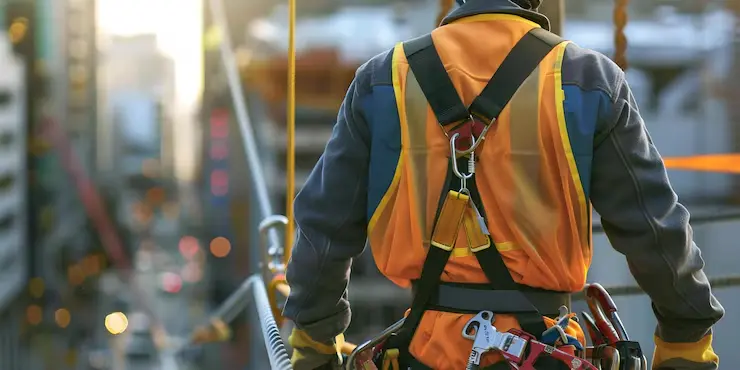
Introduction: Protecting Workers at Height
Working at height remains one of the most hazardous activities across industries. A single mistake, equipment failure or unsafe condition can result in severe injury or even a fatal accident.
A fall arrest system is a critical safety solution designed to protect workers by stopping a fall after it has occurred and reducing the forces transferred to the body. These systems provide a vital last line of defence when eliminating the risk of falling is not possible.
From construction and industrial maintenance to roof access and building facade work, understanding how fall arrest systems work is essential for maintaining workplace safety, meeting compliance requirements and protecting people working in high-risk environments.
In this guide, we’ll explain:
- What a fall arrest system is
- How fall arrest systems work
- The difference between fall arrest and fall restraint systems
- The different types of fall arrest equipment
- When fall protection is required
- Key safety considerations and compliance requirements
What Is a Fall Arrest System?
A fall arrest system is a safety system designed to stop a person’s descent after a fall has already begun. It works by absorbing and controlling the energy generated during a fall, preventing the worker from striking the ground or another dangerous surface.
Unlike fall restraint systems, which prevent a person from reaching a fall hazard, fall arrest systems allow movement within a working area but activate only if a fall occurs.
A complete fall arrest system typically includes several essential components:
Full-Body Harness
A full-body harness distributes the forces created during a fall across stronger areas of the body, including the shoulders, chest, thighs and pelvis.
Modern harnesses often include adjustable straps and padding to improve comfort while maintaining secure positioning during use.
Lanyards
Lanyards connect the worker’s harness to an anchor point or deceleration device.
Common types include:
- Shock-absorbing lanyards, which reduce the impact force during a fall
- Self-retracting lanyards (SRLs), which automatically adjust length as the worker moves
Deceleration Devices
Deceleration devices reduce fall forces by slowing the worker’s descent in a controlled manner. These are often integrated into lanyards or retractable systems.
Connectors
Connectors such as carabiners and hooks provide secure links between the harness, lanyard and anchor point.
Anchor Points
Anchor points provide the structural connection for the system and must be capable of safely supporting the forces generated during a fall.
Examples include:
- Fixed anchor points
- Eyebolts
- Horizontal lifeline systems
- Mansafe systems
Every component must work together as part of a correctly designed system to provide effective fall protection.
Fall Arrest vs Fall Restraint: Understanding the Difference
Although fall arrest and fall restraint systems are both designed to improve safety when working at height, they serve different purposes.
Fall Restraint Systems: Preventing Falls Before They Happen
A fall restraint system prevents workers from reaching areas where a fall could occur.
For example, a fixed-length lanyard may restrict a worker’s movement and prevent them from reaching an unprotected edge.
Fall restraint systems are generally preferred because they prevent the fall from happening in the first place. However, they can limit mobility and may not be suitable for tasks requiring extensive movement.
Fall Arrest Systems: Stopping a Fall in Progress
A fall arrest system activates only after a fall has started. It stops the worker’s descent and reduces the risk of serious injury.
These systems are commonly used where workers need greater freedom of movement, such as:
- Facade maintenance
- Roof work
- Rope access operations
- Industrial inspections
Because fall arrest systems allow exposure to a fall hazard, they should only be used when prevention methods are not practical.
Types of Fall Arrest Systems
Fall arrest systems can be divided into two main categories:
Active Fall Arrest Systems
Active systems require the worker to wear and connect the equipment correctly.
Examples include:
- Self-retracting lanyards
- Shock-absorbing lanyards
- Personal fall arrest systems
Passive Fall Arrest Systems
Passive systems operate without direct user involvement.
Examples include:
- Safety nets installed beneath working areas
- Catch platforms
The correct system depends on the working environment, task requirements and applicable safety regulations.
Common Types of Fall Arrest Equipment
Self-Retracting Lanyards (SRLs)
Self-retracting lanyards provide continuous connection while allowing workers freedom of movement.
The lanyard extends and retracts as the worker moves. If a fall occurs, an internal braking mechanism activates to stop the fall quickly.
SRLs are widely used because they reduce fall distance while allowing flexibility during work activities.
Shock-Absorbing Lanyards
Shock-absorbing lanyards include an energy-absorbing element designed to reduce the forces transferred to the worker during a fall.
When activated, the absorber deploys and dissipates energy, helping reduce injury risks.
Horizontal Lifeline Systems
Horizontal lifeline systems, sometimes referred to as Mansafe systems, provide continuous protection along horizontal working areas.
They may include:
Rigid Horizontal Lifelines
These use fixed rails or tracks with travelling anchor points that allow workers to move along the system while remaining connected.
Flexible Horizontal Lifelines
These typically use tensioned wire or textile lines installed between anchor points.
They allow workers to move horizontally while maintaining fall protection.
Vertical Lifeline Systems
Vertical lifeline systems are designed for climbing and vertical movement.
They use either:
- Flexible lines made from rope or cable
- Rigid rail systems integrated into ladders or access structures
A guided fall arrester moves along the line and locks during a fall.
Safety Nets
Safety nets are passive fall arrest systems installed below working areas to catch workers or equipment if a fall occurs.
They are commonly used where traditional personal fall protection systems are unsuitable.
How Does a Fall Arrest System Work?
A fall arrest system works through a combination of anchorage, connection, energy absorption and body support.
1. Anchorage
The anchor point provides the structural support needed to withstand fall forces.
Anchor systems must meet relevant standards, including requirements outlined in BS EN 795 and BS 7883.
2. Connection
The lanyard connects the worker’s harness to the anchor point.
During a fall, shock absorbers or braking mechanisms activate to control the descent.
3. Harness Support
The full-body harness distributes forces across the body to reduce injury risk.
4. Energy Absorption
The system slows the fall and reduces impact forces, allowing the worker to be safely stopped.
When correctly designed, installed and used, a fall arrest system can prevent a fall from becoming a life-threatening incident.
When Are Fall Arrest Systems Required?
Fall protection is required whenever workers are exposed to a risk of falling that could cause injury.
Common situations requiring fall arrest systems include:
- Working on roofs or elevated platforms
- Construction activities at height
- Industrial maintenance work
- Areas without adequate edge protection
- Rope access operations
Risk assessments should always determine the most appropriate protection method for each workplace.
Understanding BS 7883:2019 and Fall Protection Standards
The updated BS 7883:2019 standard introduced important improvements for the design, installation, inspection and maintenance of anchor systems used in personal fall protection.
Key updates include:
Classification of Anchor Types
The standard defines five anchor categories:
- Type A
- Type B
- Type C
- Type D
- Type E
Each category has specific applications and testing requirements.
Improved Testing Requirements
Installed anchors must undergo appropriate testing to confirm they meet safety requirements.
Greater System Compatibility
The standard highlights the importance of ensuring that all components—including harnesses, lanyards and anchors—work together as a complete system.
Defined System Designer Responsibilities
The role of a system designer ensures that fall protection systems are properly planned according to:
- Workplace conditions
- User requirements
- Equipment selection
- Rescue considerations
Essential Safety Considerations for Fall Arrest Systems
Regular Inspection and Maintenance
Fall arrest equipment must be inspected before every use.
Regular professional inspections are also required to identify:
- Damage
- Wear
- Corrosion
- Incorrect operation
Well-maintained equipment improves reliability and extends service life.
Worker Training
Training is essential for safe use.
Workers should understand:
- How to correctly wear harnesses
- How to connect equipment
- How to inspect components
- How to respond during emergencies
Regular refresher training helps maintain competence.
Certification and Compliance
Fall arrest systems must comply with relevant safety standards, including:
- BS EN 795 for anchor devices
- BS 7883 for anchor system design and installation
Compliance ensures systems perform correctly when they are needed most.
Limitations and Risks of Fall Arrest Systems
Although highly effective, fall arrest systems must be correctly selected and used.
Potential risks include:
- Swing falls
- Incorrect anchorage
- Insufficient clearance distance
- Equipment misuse
- Incompatible components
Not every anchor point is suitable for every activity. For example, an anchor designed for fall arrest may not be suitable for abseiling or rope access work.
Always follow manufacturer instructions and system design requirements.
Emergency Rescue Planning After a Fall
A fall arrest system is only one part of a complete safety strategy.
Employers must have a rescue plan that considers:
- Rescue equipment availability
- Trained rescue personnel
- Emergency procedures
- Suspension trauma risks
A quick and effective rescue response is essential after a fall to minimise further health risks.
Protect Your Workforce with Professional Fall Protection Solutions
Working at height requires careful planning, reliable equipment and expert knowledge.
At Spectrum, we provide comprehensive fall protection services, including:
- System design
- Installation
- Testing
- Certification
- Maintenance
Our team helps businesses meet safety requirements while delivering practical solutions tailored to their working environments.
Protecting workers should never be left to chance. Investing in the right fall protection system helps create safer workplaces and reduces the risks associated with working at height.
Frequently Asked Questions
At What Height Is Fall Protection Required?
Fall protection requirements depend on the specific risk assessment and working environment. While many situations involve heights around 2 metres or more, employers must evaluate the actual fall risk rather than relying on height alone.
How Often Should Fall Arrest Equipment Be Inspected?
Equipment should be checked before every use. Professional inspections should also be completed at intervals recommended by regulations, manufacturers and system requirements.
Who Can Inspect Fall Protection Systems?
Inspections should be carried out by competent and trained individuals with knowledge of fall protection equipment and applicable standards.
What Are the Main Limitations of Fall Arrest Systems?
Fall arrest systems cannot eliminate all risks. Users must consider fall clearance, swing hazards, anchorage suitability and correct equipment selection.
What Is the Hierarchy of Fall Protection?
The hierarchy prioritises:
- Eliminating work at height where possible
- Preventing falls through barriers or restraint systems
- Using fall arrest systems as the final protective measure
How Do You Rescue Someone After a Fall?
A rescue should follow a planned procedure using suitable equipment and trained personnel. Quick action is important to reduce risks associated with prolonged suspension in a harness.

