Graffiti is one of the most common forms of vandalism affecting commercial and industrial properties across the UK. From retail units and office buildings to warehouses, factories and logistics hubs, it can appear overnight and create an immediate negative impression. Beyond aesthetics, it can also signal neglect, encourage repeat vandalism and contribute to wider anti-social behaviour if not dealt with quickly.
For business owners and facilities managers, a fast and well-planned response is essential to protect both property value and professional reputation.
Why Graffiti Is a Serious Issue for Commercial Properties
In commercial and industrial environments, appearance plays a key role in how customers, clients and partners perceive a business. Graffiti on external walls, shutters, loading bays or signage can:
- Create an impression of poor security or lack of maintenance
- Deter customers or visitors from engaging with the business
- Encourage further vandalism if left untreated
- Potentially impact staff morale and workplace perception
- Lead to increased long-term maintenance costs if not addressed quickly
In industrial estates or business parks, graffiti can also spread rapidly between neighbouring properties if not managed promptly, making early intervention even more important.
Why You Should Not Attempt DIY Graffiti Removal
Although it may seem cost-effective to remove graffiti in-house, this approach often causes more harm than good, especially on commercial and industrial building materials.
Different surfaces such as coated metal cladding, concrete, brickwork and composite panels react differently to cleaning products. Using incorrect chemicals or techniques can result in:
- Surface staining or permanent discolouration
- Damage to protective coatings or paints
- Chemical burns or safety risks for staff
- Paint spreading deeper into porous materials
- “Ghosting,” where faint marks remain even after cleaning
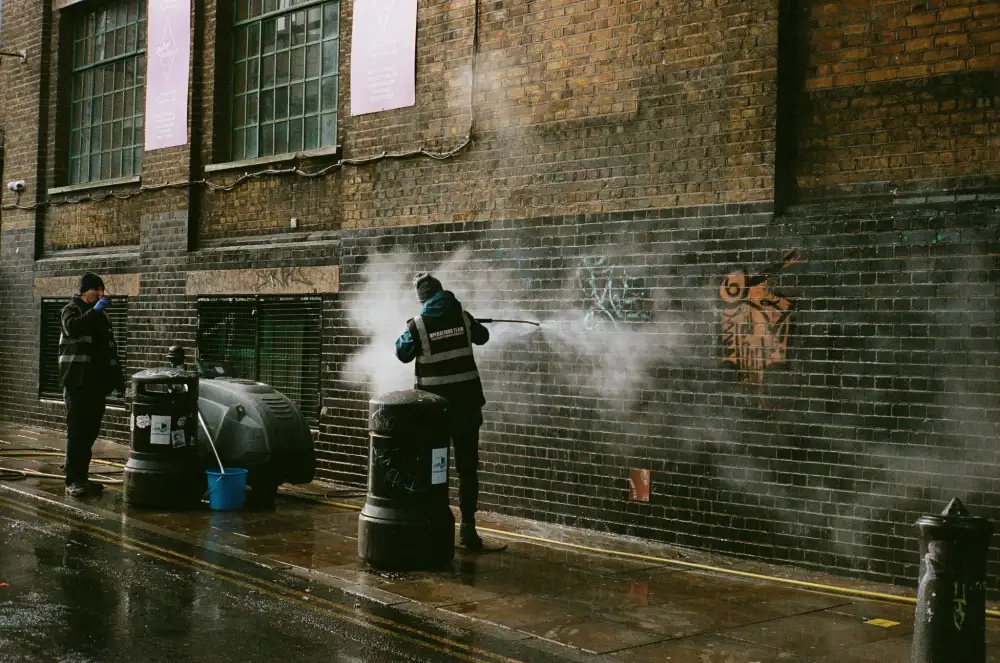
Pressure washing is also commonly misused. On industrial surfaces, high-pressure jet washing can erode protective layers, damage mortar joints and force contaminants deeper into porous substrates, making future removal more difficult.
For these reasons, graffiti removal should always be approached with caution and the right expertise.
The Importance of Professional Graffiti Removal for Businesses
For commercial and industrial sites, professional graffiti removal is the most effective and safest option. Specialists assess the type of paint, surface material and extent of contamination before selecting the appropriate treatment method.
A professional approach typically includes:
- Surface-specific cleaning agents designed to lift graffiti without damage
- Controlled application techniques to protect surrounding materials
- Environmentally responsible disposal of residues where required
- Restoration of the surface to its original appearance wherever possible
- Rapid response to prevent further vandalism
Fast action is particularly important. Research and field experience show that graffiti removed within 24–48 hours is significantly less likely to reappear in the same location, as prompt removal reduces the “visibility reward” for vandals.
For commercial premises, many providers offer rapid response services where businesses can submit images of the damage for assessment and receive a quick quotation. This helps minimise disruption and downtime.
Choosing the Right Graffiti Removal Provider
When appointing a contractor for commercial or industrial graffiti removal, it is important to ensure they have relevant experience working on business premises and larger-scale sites.
Businesses should consider asking:
- Have they worked on similar commercial or industrial buildings before?
- Do they provide a risk assessment and method statement before work begins?
- How do they protect surrounding assets, signage and finishes?
- What cleaning methods and chemicals will be used for the specific surface?
- Can they respond quickly in urgent situations?
A reputable provider should be transparent about their process and able to demonstrate a clear understanding of health, safety and environmental considerations on active business sites.
Reporting Graffiti in Commercial and Industrial Areas
Even though businesses often deal with graffiti privately, it is still important to report incidents to the relevant authorities. Reporting helps track patterns of vandalism and supports wider efforts to reduce anti-social behaviour in commercial zones and industrial estates.
Reports can typically be made through non-emergency police channels or local authority reporting systems.
Planning Permission and Protected Buildings
Some commercial properties may fall under special planning controls, particularly if they are listed buildings or located within conservation areas. In such cases, additional permission may be required before carrying out cleaning or restoration work.
If there is any uncertainty, it is advisable to consult the local planning authority before proceeding with removal to ensure compliance with regulations.

