

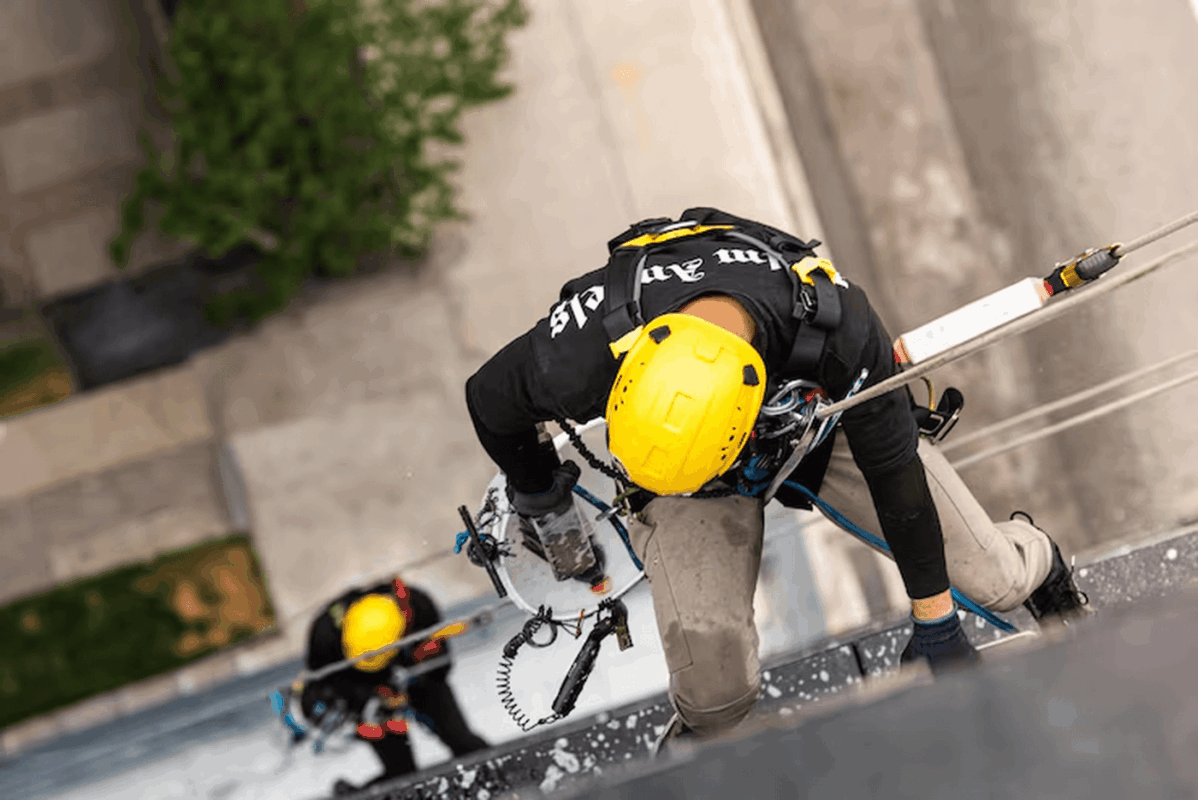
Building cladding plays an important role in protecting a property from the UK’s changing weather conditions while contributing to its appearance, thermal performance and overall durability. However, constant exposure to wind, rain, temperature changes and pollution can eventually cause cladding systems to deteriorate.
When defects occur on upper floors or difficult-to-reach elevations, arranging repairs can present an access challenge. Traditional scaffolding and mobile elevated work platforms are not always practical, particularly around busy commercial buildings, restricted sites and high-rise properties.
Cladding repair via rope access provides a flexible method of reaching elevated façades while carrying out inspection, maintenance and repair work. By using specialist industrial rope access systems, trained technicians can access areas that may otherwise require extensive temporary access equipment.
For property owners, facilities managers and building contractors, understanding how rope access cladding repairs work and recognising when action is required can help prevent minor defects from developing into more extensive façade problems.
What Is Cladding Repair via Rope Access?
Rope access is a specialist working-at-height technique that allows trained technicians to reach building façades using ropes, harnesses, anchor systems and other specialist equipment.
Unlike recreational abseiling, industrial rope access is designed specifically for professional inspection, maintenance and repair work.
For cladding projects, technicians can descend or ascend the external face of a building and position themselves close to the affected area. This can provide direct access for inspecting defects and completing suitable repairs.
Rope access can be particularly useful for:
- High-rise buildings
- Commercial properties
- Office blocks
- Residential developments
- Industrial buildings
- Warehouses
- Complex façades
- Areas with restricted ground access
- Buildings where scaffolding would cause significant disruption
The exact access system and repair method should always be selected following a suitable assessment of the building and proposed work.
Why Does Building Cladding Need Repair?
Cladding systems are designed to withstand external conditions, but no façade material is completely maintenance-free.
Over time, a building may develop issues because of:
Weather Exposure
Strong winds, heavy rain, frost and temperature fluctuations can place stress on external cladding systems.
Repeated expansion and contraction can affect joints, fixings and sealants, particularly where components have been exposed to the elements for many years.
Damaged Panels
Cladding panels can become cracked, dented, displaced or damaged by impact.
Even relatively small areas of damage should be assessed, particularly if the affected section could allow water to enter the building envelope.
Loose or Failed Fixings
Fixings are essential for keeping cladding components securely attached to the structure.
Corrosion, movement, installation problems or long-term deterioration can affect fixings and connections. Loose components may become a safety concern and require prompt professional attention.
Deteriorating Sealants and Joints
Sealants around cladding panels, windows, doors and other façade interfaces can deteriorate with age.
Cracking, shrinking or separation can create pathways for moisture to enter the building envelope.
Corrosion
Metallic cladding systems and associated fixings can be vulnerable to corrosion depending on their material, protective coating and environmental exposure.
Early identification can help determine whether cleaning, treatment, replacement or further investigation is required.
What Is Involved in a Rope Access Cladding Repair?
Every building is different, so the precise process will depend on the cladding system and the nature of the defect. However, a typical project may involve several stages.
Initial Building and Façade Assessment
The first step is to understand the condition of the cladding and identify the areas requiring attention.
A visual inspection from ground level may provide some information, but high-level defects can be difficult to assess accurately from below.
Rope access allows technicians to get closer to the façade and examine individual panels, fixings, joints and surrounding areas.
Identifying the Cause of the Problem
Repairing the visible defect is only part of the process.
Where possible, the underlying cause should also be considered. For example, a damaged sealant joint may be associated with movement, water penetration or deterioration of adjacent materials.
Understanding the cause can help determine the most appropriate repair rather than simply treating the visible symptom.
Rope Access Planning
Before technicians begin work at height, suitable access and safety arrangements need to be established.
This can include assessing:
- Suitable anchor arrangements
- Rope routes
- Building structure
- Working positions
- Falling-object risks
- Ground-level exclusion zones
- Weather conditions
- Nearby electrical hazards
- Pedestrian and vehicle movements
- Emergency and rescue arrangements
Work at height should be properly planned, with suitable equipment and competent personnel used for the task.
Carrying Out Repairs
Once access has been established and the repair method agreed, technicians can reach the affected sections of the façade.
Depending on the cladding system and defect, work may involve:
- Re-securing loose components
- Replacing damaged panels
- Repairing or replacing fixings
- Renewing deteriorated sealants
- Treating corrosion
- Repairing joints
- Carrying out minor associated façade repairs
More extensive structural or façade defects may require additional investigation and specialist remedial work.
Final Inspection
After repairs have been completed, the affected area should be checked to ensure that the work has been carried out correctly.
For larger maintenance programmes, photographic records and inspection reports can also help property owners maintain a record of the building’s condition.
When Should You Arrange Cladding Repairs?
Knowing when to act can be just as important as knowing how repairs are carried out.
Some defects may appear relatively minor but could become more significant if exposed to continued weather conditions.
Visible Cracks or Damage
Cracked, broken, dented or displaced panels should be professionally assessed.
Impact damage can compromise individual components, while cracks may allow moisture to penetrate areas that were previously protected.
Loose Cladding Panels
Movement, rattling or visibly loose sections of cladding should not be ignored.
Loose external components can present a potential falling-object hazard, particularly on buildings located near pavements, entrances, roads or other occupied areas.
Water Ingress
Signs of water entering through or around the façade may indicate deterioration of joints, seals or other elements of the building envelope.
Internal damp patches, staining or recurring moisture around windows and external walls can warrant further investigation.
Failed Sealant
Cracked, missing or deteriorated sealant around cladding panels and façade interfaces can reduce the effectiveness of weatherproofing.
Replacing failed sealant at an appropriate stage may help prevent more extensive moisture-related problems.
Corrosion Around Fixings
Rust or corrosion around fixings and connections can indicate deterioration that requires investigation.
This is particularly important where corrosion could affect the security or performance of external components.
After Severe Weather
Strong winds and storms can expose weaknesses in building façades.
Following severe weather, property owners and facilities managers may wish to arrange an inspection if panels appear displaced, damaged or loose.
Why Choose Rope Access for Cladding Repairs?
One of the main advantages of rope access is the ability to reach difficult areas without necessarily requiring extensive scaffolding.
Reduced Ground-Level Disruption
Scaffolding can occupy considerable space around a building.
Rope access can require considerably less equipment at ground level, which may be advantageous for properties with busy entrances, narrow pavements or restricted surrounding areas.
Access to Difficult Elevations
Complex architectural designs can make conventional access difficult.
Rope access technicians can often position themselves around sections of a façade that would be challenging to reach using a standard MEWP, subject to the building and site conditions.
Efficient Access
For suitable projects, rope access systems can be established without the extensive installation associated with some conventional access methods.
This can make the approach useful for targeted inspections and repairs where only specific areas of a building require attention.
Suitable for Many Building Types
Rope access can potentially be used on a variety of commercial, residential and industrial properties.
The technique can be particularly useful for high-level maintenance where access from the ground is restricted.
Rope Access for Cladding Repairs in London
In busy urban environments, access requirements can become particularly challenging.
Rope Access in London can provide a practical option for suitable cladding inspection and repair projects where scaffolding or powered access equipment may be difficult to position.
London buildings can have busy pavements, restricted courtyards, narrow access routes and surrounding structures that complicate conventional access arrangements.
Rope access can minimise the amount of equipment required at ground level, potentially reducing disruption to building occupants, pedestrians and nearby businesses.
However, every project should be assessed individually. The height and complexity of a building do not automatically make rope access the appropriate solution.
Rope Access vs Scaffolding for Cladding Repair
Both rope access and scaffolding can be appropriate for façade maintenance, depending on the project.
Rope access can be advantageous for targeted inspections, localised repairs and buildings where ground-level access is restricted.
Scaffolding may be more suitable for extensive refurbishment where workers need continuous access across a large section of the façade for an extended period.
Other access options, such as mobile elevating work platforms, may also be appropriate where there is sufficient space and suitable ground conditions.
The most suitable solution depends on factors including:
- Building height
- Façade design
- Extent of repairs
- Duration of work
- Ground conditions
- Access restrictions
- Surrounding environment
- Materials and tools required
- Safety requirements
Is Rope Access Safe for Cladding Maintenance?
Rope access is a specialist form of work at height and requires appropriate planning, equipment and competence.
A professional contractor should assess the proposed work, identify hazards and establish suitable control measures before technicians access the building.
Important considerations can include independent safety systems, suitable anchor arrangements, equipment inspections, exclusion zones and emergency rescue procedures.
Weather conditions should also be monitored because high winds, heavy rain and other adverse conditions can affect external rope access work.
Choosing an experienced and appropriately qualified contractor is therefore an important part of any rope access cladding project.
How Regular Cladding Inspections Can Help
Waiting until a major problem becomes obvious can make building maintenance more complicated.
A planned inspection programme can help identify:
- Deteriorating sealants
- Damaged panels
- Corroded fixings
- Loose components
- Joint deterioration
- Signs of water ingress
- Other façade defects
Early identification gives property owners an opportunity to plan repairs and maintenance rather than responding only when a problem becomes urgent.
The appropriate inspection frequency depends on factors such as the building’s age, construction, location, materials and exposure to weather.
Choosing a Rope Access Cladding Repair Contractor
When arranging cladding repairs, look for a contractor with relevant experience in both rope access and façade maintenance.
Before appointing a contractor, consider asking about:
- Relevant rope access training and qualifications
- Experience with similar cladding systems
- Previous high-rise or commercial projects
- Risk assessments and method statements
- Equipment inspection procedures
- Emergency and rescue arrangements
- Insurance
- Inspection and reporting processes
- Proposed repair methods
A professional contractor should be able to explain the proposed access system and provide clear information about the work required.
Don’t Ignore Cladding Problems
Cladding is an important part of a building’s external envelope, and visible defects should not simply be treated as cosmetic issues.
Loose panels, damaged fixings, failed sealants, corrosion and water ingress can all warrant professional investigation. For buildings where conventional access is difficult, cladding repair via rope access can provide a flexible method of reaching high-level areas while keeping disruption at ground level to a minimum.
Whether a property is located in London or elsewhere in the UK, the appropriate access method should be based on the building, the repair requirements and a suitable assessment of the risks.
For property owners and facilities managers, arranging professional inspections and addressing defects promptly can help maintain the condition, safety and long-term performance of the Cladding Repair via Rope Access: A Complete Guide to Inspection, Maintenance and Repairs building facade.
Professional Cladding Repair and Rope Access
Cladding defects should never be ignored, particularly where loose panels, damaged fixings, deteriorating sealants or water ingress could affect the condition or safety of a building.
For properties where conventional access equipment is difficult to use, cladding repair via rope access can provide a flexible and efficient way to inspect and maintain high-level façades while helping to minimise disruption at ground level.
From commercial and residential buildings to complex high-rise properties, the right access solution will depend on the building design, condition of the cladding, extent of the required repairs and site environment.
For specialist Rope Access in London, property owners and facilities managers can also consider Rope Access in London Ltd, which provides professional rope access services for building maintenance and repair projects.
Whether you require a façade inspection, cladding repair, maintenance work or access to another difficult-to-reach area, arranging a professional assessment at an early stage can help identify potential problems and determine the most appropriate repair and access solution.

