
Working at height demands strict control over safety, competence and equipment quality. For UK rope access contractors, rope access equipment is the foundation of safe and efficient access to difficult-to-reach environments across industries such as construction, façade maintenance, wind energy, telecoms, offshore work and industrial inspection.
This guide outlines what rope access equipment includes, the standards that govern it and how contractors can choose, use, inspect and track equipment effectively in line with UK best practice and industry expectations.
Whether you are a contractor, QHSE professional, site supervisor or technician, this provides a practical overview of how to manage rope access systems safely and professionally.
What Counts as Rope Access Equipment?
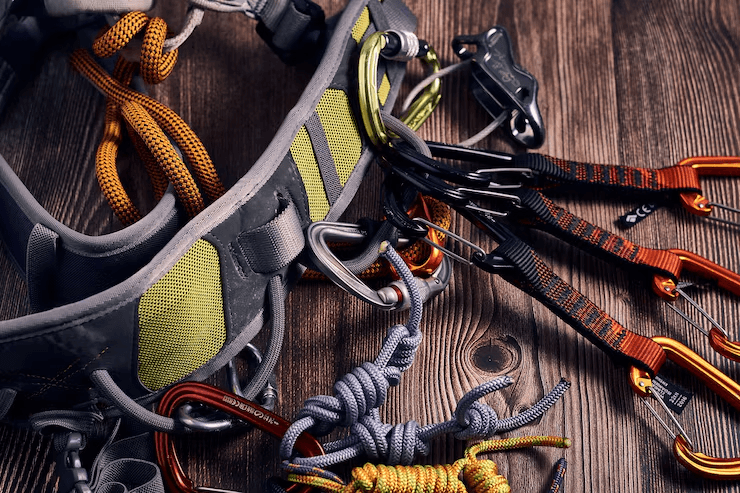
A modern rope access system typically consists of interconnected components designed to work as a redundant, controlled system. Core rope access equipment includes:
- Low-stretch kernmantle ropes (working line and backup line)
- Full-body rope access harness systems (sit/seat harness with optional chest components)
- Descenders and rope adjustment devices for controlled descent and positioning
- Ascenders and foot loops for vertical progression
- Mobile fall arrest devices for backup protection
- Connectors (karabiners, maillons) and personal lanyards/cow’s tails
- Helmets designed for industrial work at height
- Slings, anchor strops and edge protection systems
- Rescue equipment and hauling systems (task-dependent)
- Equipment bags, labels and tagging systems for identification and traceability
The exact configuration depends on the task, environment and rescue plan. All components must be compatible and used under competent supervision in accordance with manufacturer guidance.
UK Standards and Why They Matter
In the UK, rope access equipment must comply with relevant European and British standards and be used in line with industry best practice, including guidance from IRATA International.
Standards ensure equipment has been tested for strength, reliability and performance under load. Contractors should always confirm certification and retain documentation for audit and inspection purposes.
Key Equipment Standards
Ropes (EN 1891 Type A)
- Used for both working and backup systems
- Must be protected from abrasion, chemicals and UV exposure
- Any damage, glazing or sheath movement requires immediate removal from service
Harnesses (EN 361 / EN 358 / EN 813 where applicable)
- Must be full-body and rated for fall arrest and work positioning
- Correct fit, adjustment and compatibility with connectors is essential
- Inspect webbing, stitching, metalwork and labels before each use
Rope adjustment devices (EN 12841)
- Includes descenders, ascenders and backup devices
- Must be used within manufacturer-defined rope diameter ranges
- Incorrect configuration can compromise system safety
Connectors (EN 362)
- Karabiners and maillons used throughout the system
- Must be load-rated, correctly oriented and free from deformation or wear
Helmets (EN 397 / EN 12492)
- Protection from impact and falling objects
- Selection should reflect site risks (industrial, offshore, confined space, etc.)
Energy absorbers and fall arrest devices
- Reduce dynamic forces in the event of a fall
- Must be compatible as a system, not mixed across manufacturers unless approved
Anchors, slings and edge protection
- Must be appropriately rated and inspected
- Poor anchoring undermines even high-quality equipment systems
System Design, Compatibility and Human Factors
Even certified rope access equipment can become unsafe if incorrectly configured. UK contractors should always apply core system principles:
- Maintain redundancy with independent working and backup lines
- Use ropes and devices within tested diameter and load ranges
- Prevent abrasion using edge protection and correct rigging
- Ensure sufficient fall clearance is available
- Avoid cross-loading of connectors and hardware
- Keep rigging systems simple and clearly identifiable
- Ensure rescue methods are planned before work begins
Competent supervision and ongoing assessment are essential to maintaining safe system use throughout the task.
Legal Duties and Compliance in the UK
Rope access operations in the UK are governed by several legal frameworks, primarily under the Work at Height Regulations 2005. Employers and contractors must ensure:
- Work at height is properly planned and risk assessed
- Equipment is suitable, inspected and maintained
- Operatives are trained and competent
- Rescue arrangements are in place
Where rope access equipment is used in lifting operations, the LOLER 1998 regulations may also apply.
All equipment must be used in line with manufacturer instructions and recognised industry guidance, including IRATA International codes of practice.
Inspection records should include:
- Unique identification numbers
- Purchase and service history
- Inspection findings and dates
- Retirement decisions and reasons
These records must be available for client audits, regulatory inspection and internal compliance checks.
Digital Tracking and Equipment Management
Managing large inventories of rope access equipment manually can be time-consuming and prone to error. Many UK contractors now use digital inspection and tracking systems to improve efficiency and compliance.
Digital asset registers using QR codes, barcodes or NFC tagging allow teams to:
- Log inspections instantly on site
- Attach photos and inspection notes
- Track equipment lifecycle and usage history
- Generate audit-ready reports
- Reduce paperwork and administrative errors
This approach improves traceability and supports compliance with IRATA expectations and client auditing requirements.
Selecting Rope Access Equipment: Key Considerations for UK Contractors
When purchasing or specifying rope access equipment, contractors should focus on:
- Task suitability (façade access, wind turbines, offshore structures, etc.)
- Compatibility between all system components
- Durability in UK environmental conditions (rain, wind, corrosion risk)
- Ease of inspection and replacement tracking
- Ergonomics for prolonged suspension work
- Rescue capability and system integration
Selecting high-quality, compatible equipment reduces downtime, improves safety and increases operational efficiency.
Inspection, Cleaning, Storage and Retirement
Proper care is essential to maintaining rope access equipment performance and safety.
Best practice includes:
- Cleaning textile equipment with mild soap and clean water
- Air drying away from heat, sunlight and chemicals
- Storing equipment in dry, clean and controlled environments
- Conducting pre-use and periodic inspections by competent persons
- Immediately retiring any equipment showing damage or unknown loading
Once equipment integrity is in doubt, it should be removed from service without delay.
Training, Competence and Safety Culture
Rope access is a competence-driven discipline. UK technicians must be trained, assessed and regularly supervised to ensure safe use of equipment under operational conditions.
Training typically includes structured programmes aligned with industry standards and progressive certification levels under IRATA International.
Strong rope access operations also integrate broader safety knowledge such as:
- Working at height awareness
- Harness and PPE use
- Risk assessment and hazard identification
- Confined space awareness (where applicable)
- Manual handling and site safety procedures
A strong safety culture ensures equipment and people are used correctly under all conditions.
Pre-Use Rope Access Equipment Checklist
Before starting any rope access task, confirm:
- All equipment is uniquely identified and logged
- Ropes and devices are compatible and undamaged
- Connectors lock correctly and function smoothly
- Anchors are secure, rated and documented
- Rescue equipment is available and ready for use
- Inspection records are current and valid
Consistent pre-use checks remain one of the most effective safety controls in rope access operations.

