

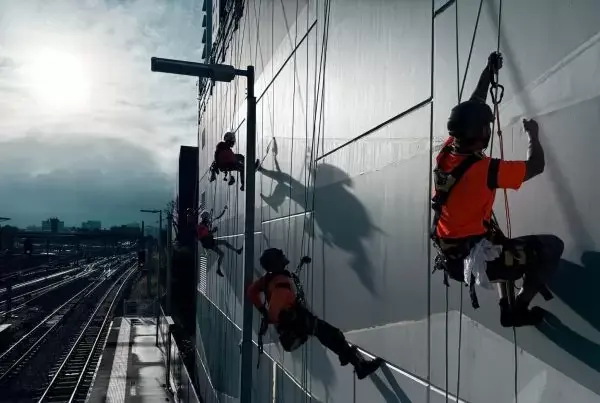
When it comes to maintaining high-rise buildings, choosing the right access method is essential. Whether you need window cleaning, inspections, or general maintenance, safety, efficiency and practicality should always come first.
For decades, scaffolding has been the go-to solution. However, since the 1980s, rope access (also known as abseiling) has emerged as a highly effective alternative.
So, which is better—rope access or scaffolding? Let’s break it down.
Understanding the Difference Between Abseiling and Scaffolding
Before comparing the two, it’s important to understand what each method involves.
What Is Rope Access (Abseiling)?
Rope access is a technique where trained technicians use ropes and harness systems to work safely at height. It is commonly used for tasks such as:
- Window cleaning
- Building maintenance
- Façade repairs
- Inspection and restoration work
“Abseiling” is a general term for descending a structure using ropes. In a commercial setting, it’s often referred to as industrial rope access, where skilled professionals carry out specialised tasks while suspended.
Technicians must undergo rigorous training and certification to ensure safety and compliance with industry standards.
What Is Scaffolding?
Scaffolding is a temporary structure built alongside a building to provide a stable working platform. Typically made from metal frames and wooden planks, it allows workers to access different parts of a structure safely.
It is widely used in construction, repairs and large-scale maintenance projects. However, scaffolding requires time to assemble and dismantle, along with strict safety assessments before use.
5 Reasons Rope Access Is Better Than Scaffolding
While both methods have their place, rope access offers several clear advantages:
- Minimal Disruption
Rope access requires far less equipment and setup. Technicians arrive, complete the work and leave without altering the building’s appearance.In contrast, scaffolding can remain in place for days or weeks, affecting aesthetics and privacy.
- Cost-Effective
With fewer materials and reduced labour time, rope access is significantly more affordable than scaffolding. - Faster Setup and Completion
Scaffolding can take hours—or even days—to assemble. Rope access systems, however, can be set up in minutes, allowing work to begin almost immediately. - High Safety Standards
Despite appearances, rope access has an excellent safety record. Strict training, regulations and procedures ensure technicians operate in a controlled and secure manner. - Greater Flexibility
Rope access allows technicians to reach difficult or restricted areas that scaffolding may not be able to access. It’s ideal for complex building designs and tight spaces.
Why Rope Access Is More Cost-Effective
Scaffolding costs increase significantly with building height and project duration. The longer it takes to erect, maintain and dismantle the structure, the higher the overall expense.
Rope access, on the other hand, requires minimal setup and equipment. Once anchor points are established, technicians can begin work immediately.
In many cases, projects that would take weeks with scaffolding can be completed in just a few days using rope access—resulting in substantial cost savings.
Why Professionals Prefer Rope Access
For high-rise maintenance specialists, rope access has become the preferred solution due to its efficiency and practicality. It allows teams to:
- Complete projects faster
- Reduce costs for clients
- Minimise disruption to occupants
- Deliver high-quality results in hard-to-reach areas
Additionally, advanced techniques and custom equipment make it possible to tackle even the most challenging structures.
The Importance of Skilled Rope Access Technicians
Rope access is only as effective as the people performing it. Highly trained technicians undergo years of training to master safety procedures and technical skills.
Investing in skilled professionals ensures:
- Safer operations
- Higher-quality workmanship
- Reliable project outcomes
Final Verdict: Rope Access vs Scaffolding
While scaffolding still has its place for large-scale construction, rope access stands out as the superior choice for most maintenance tasks.
In summary, rope access offers:
- Faster project completion
- Lower costs
- Minimal disruption
- Excellent safety standards
- Greater accessibility
Frequently Asked Questions
Is rope access safer than scaffolding?
Yes, rope access has a strong safety record thanks to strict training and industry regulations.
Is rope access the same as abseiling?
Abseiling is part of rope access. Rope access refers to the full system, training and professional application.
What is rope used for in scaffolding?
Ropes in scaffolding are typically used for lifting tools and materials via pulley systems.

